
Motivation
Digital fabrication with earth-based materials offers a promising path toward circular, low-carbon construction. Yet earth’s low tensile strength limits its use in ambitious or load-bearing structures. This project explores whether natural fiber reinforcement and advanced digital methods can make earth both structurally relevant and future-ready.
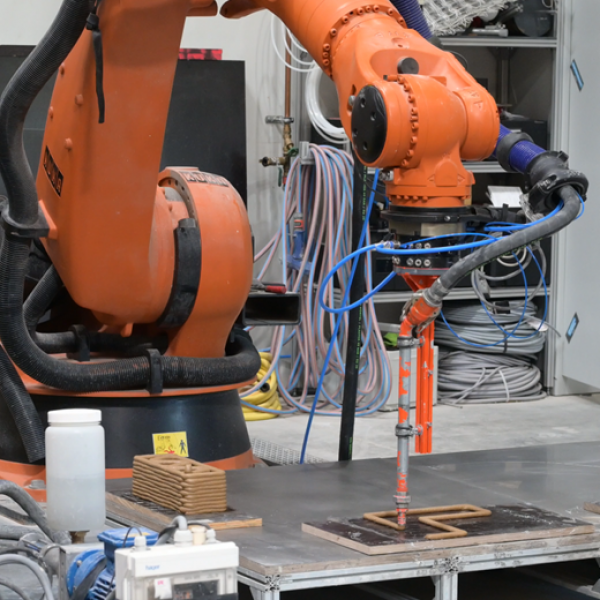
Two approaches are tested: additive manufacturing with continuous natural fibers and extrusion with textile reinforcements. Both also use short fibers in the matrix to improve stability, adhesion, and crack control. The idea is that optimized fiber–matrix bonding enhances strength, precision, and durability while keeping the material recyclable and biocompatible. The study evaluates fiber types, orientations, and plant-based binders, supported by advanced analysis of bonding and moisture transport. Structural feasibility will be shown through overhangs and load-bearing elements. A focus group study will also examine how mixing low-tech earth with high-tech fabrication affects industry acceptance.
The goal: to establish reinforced earth composites as a viable, circular, and sustainable material for digital construction.


