
Skip Navigation

Cooperation Platforms From Theory to Practice

CARE Next-Generation Prefab Plant Prototype

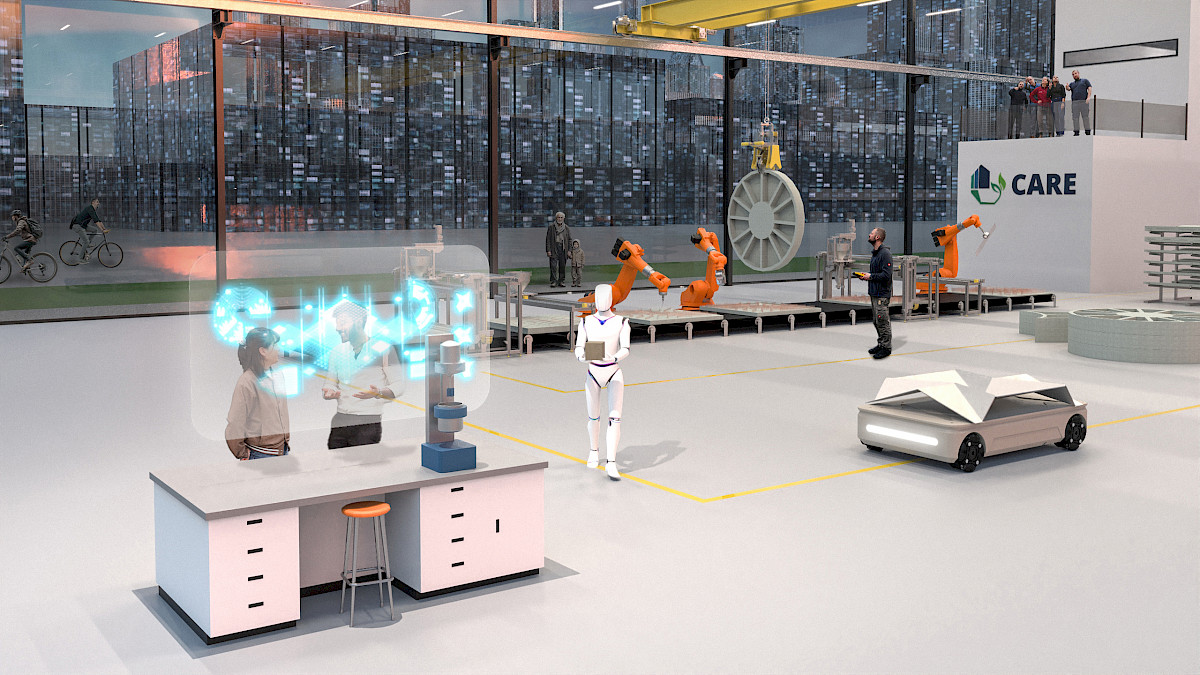
At the CARE Research Center Dresden, a digital fabrication laboratory is taking shape, complemented by a branch in Aachen. The “Prefab Plant” is designed as a prototype for the next generation of prefabrication facilities, featuring robotic assembly lines, adaptable molds for complex designs, and advanced additive manufacturing with mineral-based and fiber-reinforced materials.

The plant will also develop innovative composite materials through recycling and biomineralization. With smart sensors and data-driven coordination of machines, materials, and workflows, it showcases how prefabrication can evolve into a resource-efficient and future-oriented approach to construction.
CARE Future Technologies Experimental Construction Site

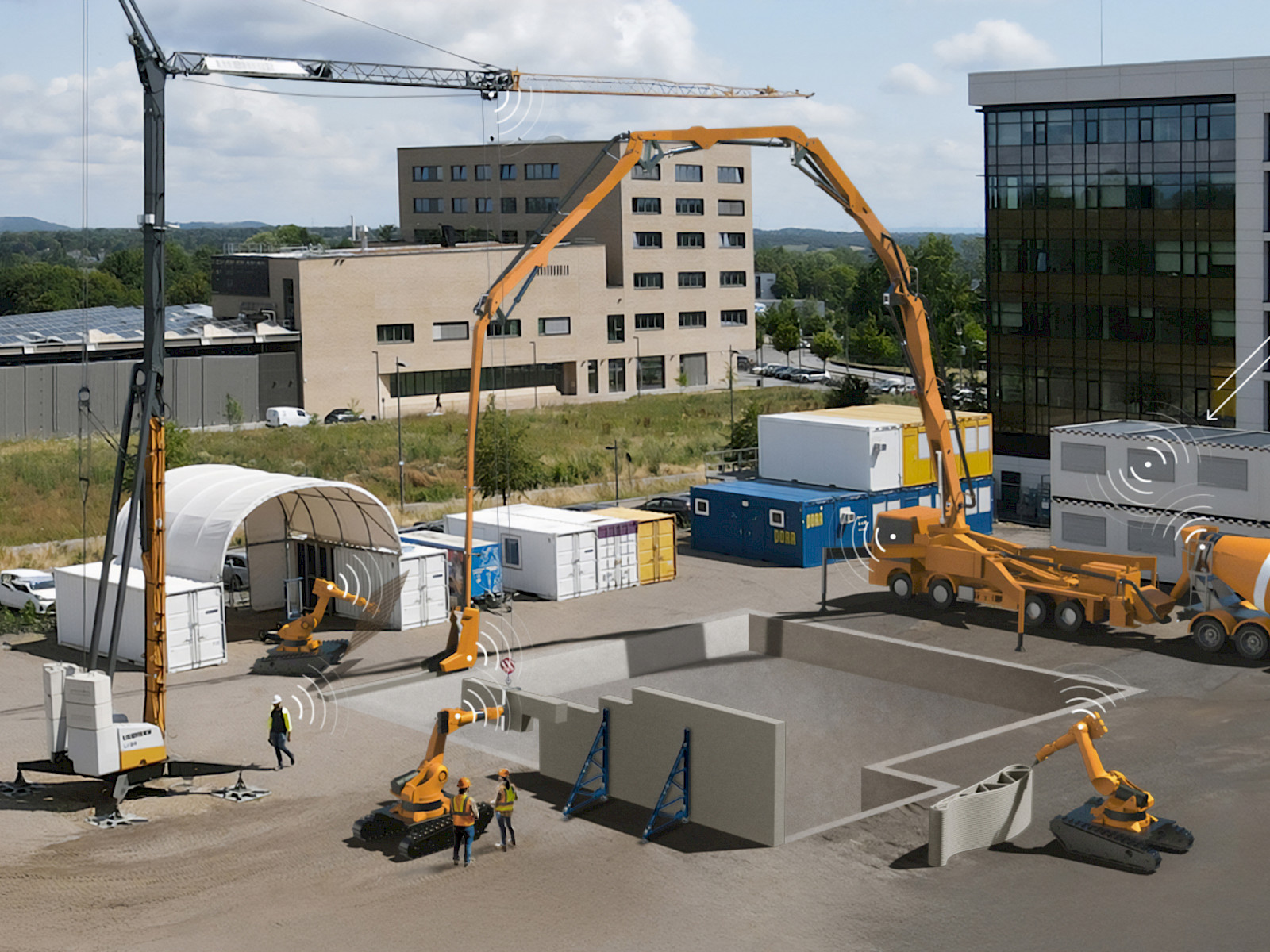
The RWTH Reference Construction Site was established by Prof. Sigrid Brell-Cokcan in 2020 as part of the ‘Internet of Construction’ project and is the first European 5G-enabled large-scale construction test-bed. On the 4,000 m² CARE performs large-scale research using automated heavy-duty machinery for the assembly and disassembly of building modules, recovery of components for structural reuse, in situ 3D printing, human-cyberphysical systems, and collaborative robots. The site also serves as a dynamic CARE living lab, where innovative solutions are developed to shape the future of efficient and technology-driven construction.


CARE Life-size Bridge Experimentation Site

A prestressed three-span concrete bridge, 45 m long and 4.5 m wide, was completed in April 2024 in Bautzen, near Dresden. Known as openLAB, this research site was initiated by Prof. Steffen Marx as part of the IDA-KI project, “Automated Evaluation of Monitoring Data from Infrastructure Constructions Using AI and IoT.” CARE has full access to the bridge and uses it primarily for research on structural health monitoring and upgrading existing infrastructure. One 15 m span of the superstructure will be built following novel CARE design principles and will undergo full-scale loading tests to evaluate its structural performance, validate new modeling techniques, and provide accurate predictions and insights into how the structure behaves under various conditions. The bridge will be tested under controlled overloading and repaired with innovative methods, advancing resilient and sustainable infrastructure design.